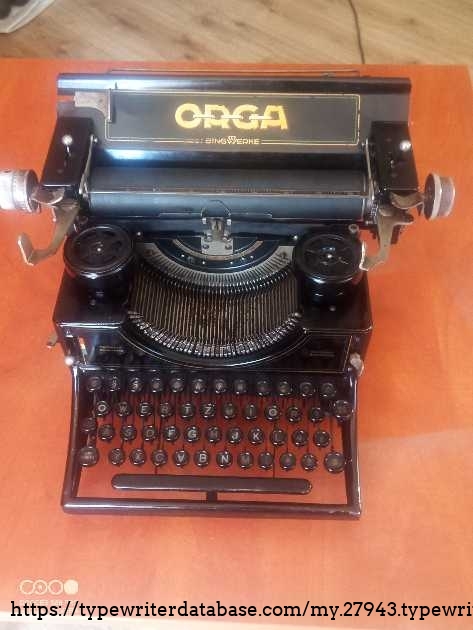
I have just finalized the lamination of the documentation sheets describing a unique Orga A38 typewriter—a verification prototype from 1908.
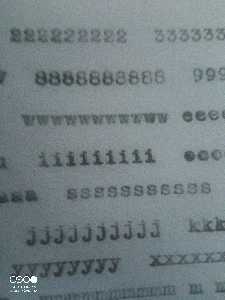
In the prepared materials, I have included a detailed explanation of the typefaces used, specifying their unique characteristics and their significance in identifying this particular unit. A key element of this documentation is the technical analysis of the brass-and-cast-iron pawl. I have demonstrated the structural differences between this component and later production models, which serves as direct evidence that this machine belongs to the pre-series (test series).
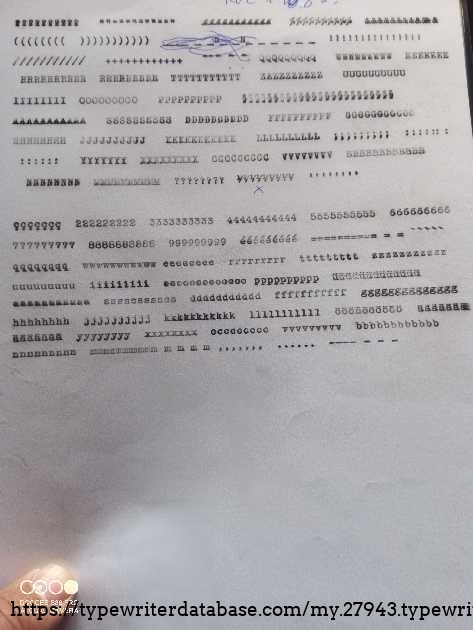
Typeface presentation: Orga A38 – verification prototype from 1908.
My post on the IFHB forum has been up for two months, and so far, no one has been able to provide a substantive challenge to my evidence. I am remaining patient—it often takes time for the truth to fully settle with experts.
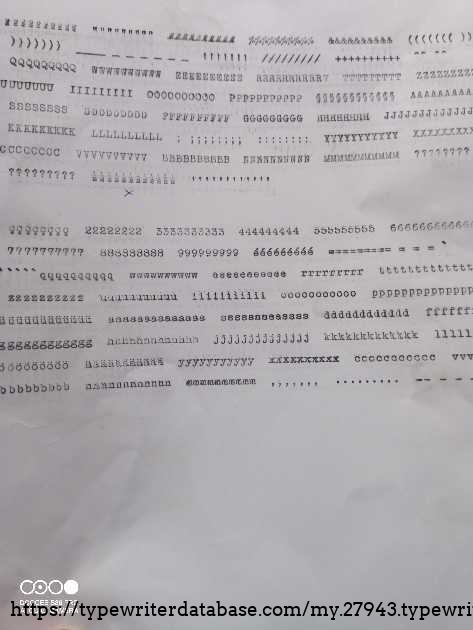
Comparative analysis of the typeface from the Orga Standard typewriter (No. 4208)
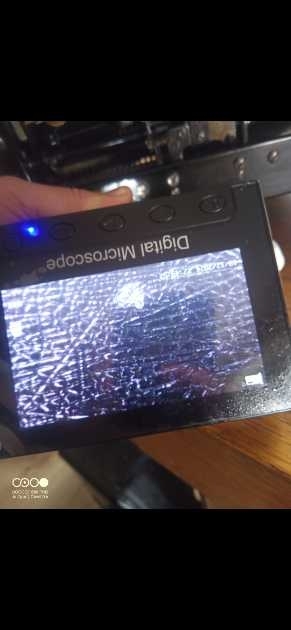
The specific, 'wrinkled' texture of the lacquer on the lower rear part of the casing proves that this is an original, untouched component that has never been restored. The remaining parts of the machine show signs of secondary over-painting, which likely occurred after 1921. This suggests a deliberate aesthetic treatment aimed at unifying the prototype's appearance with the forthcoming mass-produced models.
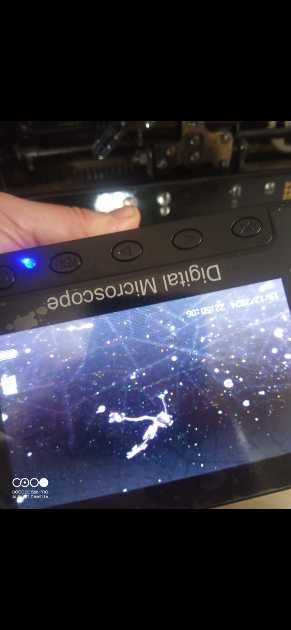
The following analysis is based on a microscopic surface verification of the Orga Standard 4208 model (manufactured after 1923) in relation to the A38 specimen. Observations reveal fundamental differences in the behavior and aging of the paint coating, allowing for the following conclusions
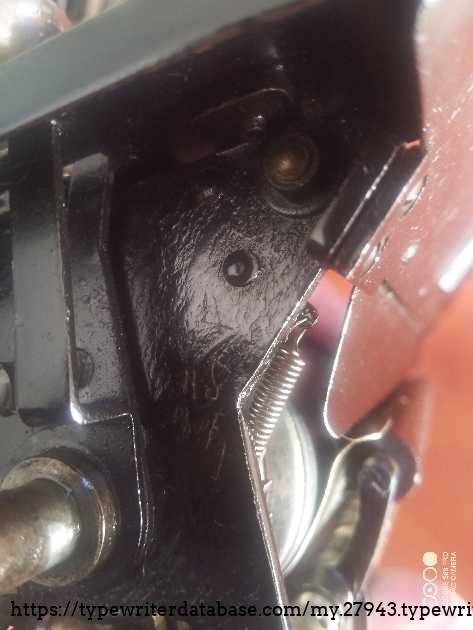
Upon a repeated, detailed inspection of the platen housing, I discovered a handwritten marking 4.II.8, which should be interpreted as the date February 4, 1908. This inscription, placed in a structurally concealed location, likely documents the completion of work on this specific test unit or the finalization date of the prototype's construction.
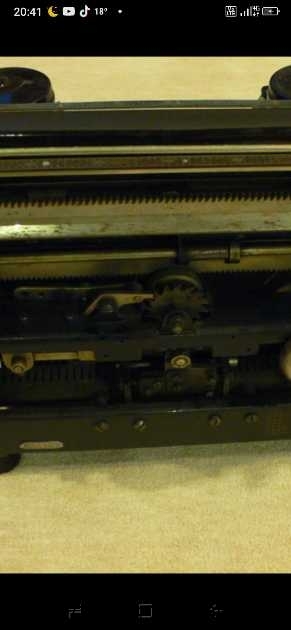
I managed to find photos of the Orga Standard A14 model. The gear pawl is in terrible condition, which only confirms the uniqueness of the A38 model.
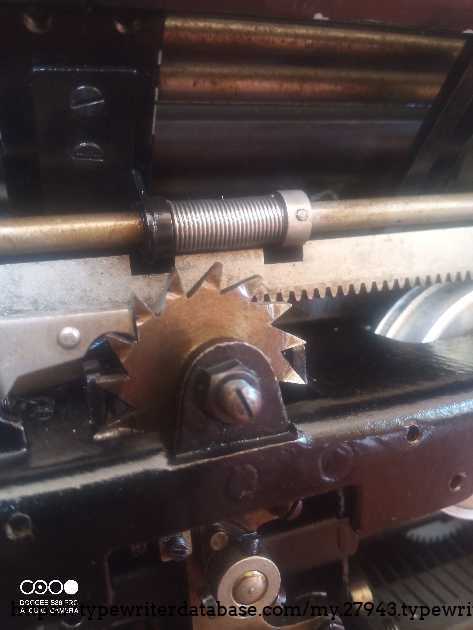
The Orga A38 features a brass-and-cast-iron gear pawl with uneven profiles. It appears to be handcrafted, in contrast to the mass-produced models where the gears look like they were machine-stamped on a press.
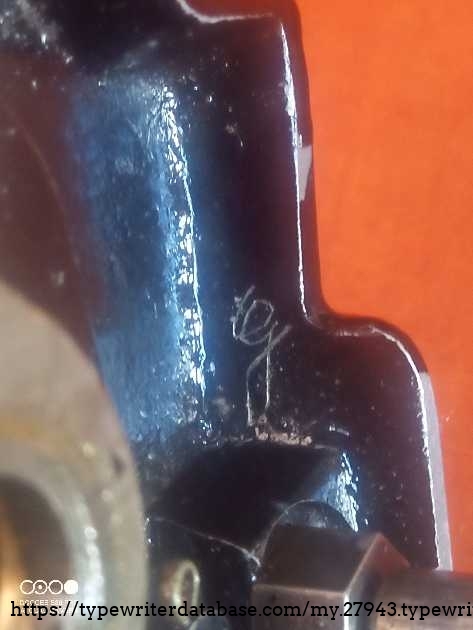
The hand-applied Ig marking visible on the structural element serves as key physical evidence confirming the unique status of this machine. This signature refers directly to Ignaz Bing (of the Gebrüder Bing family), suggesting that this specific unit was produced under the personal supervision of the brand owner.
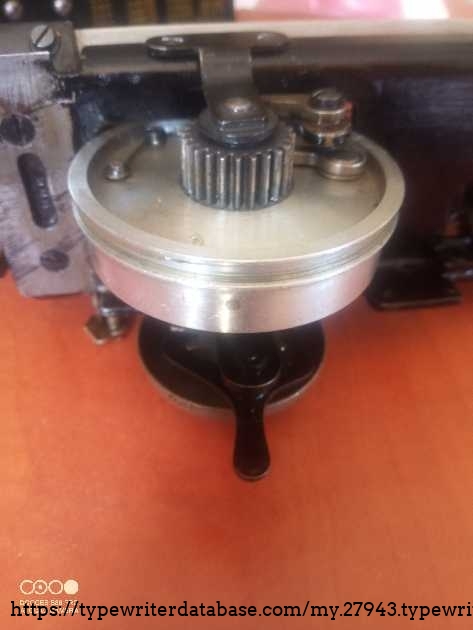
In the Orga A38 model, the carriage drum deserves special attention, as it is made entirely of aluminum. In this particular specimen, the component has been preserved in true collector's condition—its surface remains so pristine that it looks as if the machine rolled off the production line only yesterday. This is all the more impressive given the age and the prototypical nature of this unit.
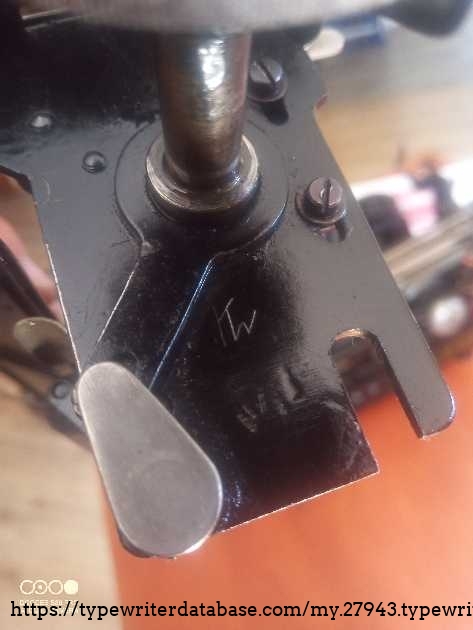
The handwritten "I.Yw" marking inscribed directly onto the metal is no coincidence; it is a testament to advanced workshop metallurgy. It indicates a specific batch of steel or a dedicated tempering process applied to the ratchet pawl. In this process, the key was to achieve a precise balance: extreme hardness of the working edge while maintaining high impact strength. As a result, the component does not crumble under sudden pressure during the operation of the escapement mechanism. The presence of this handwritten notation confirms that we are dealing with a priority specimen—a unit that required process documentation directly on its parts.
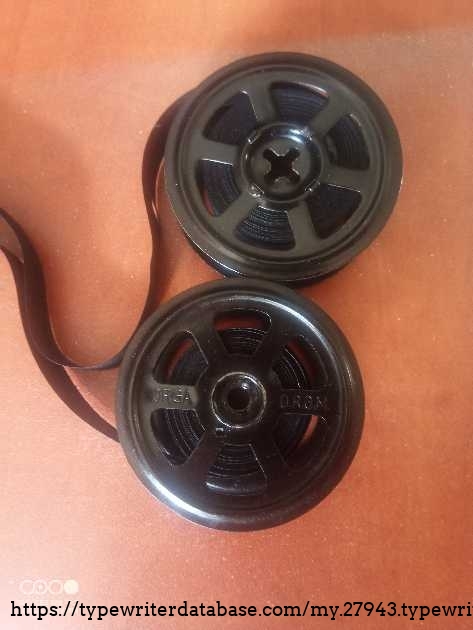
The D.R.G.M. (Deutsches Reichs-Gebrauchsmuster) designation confirms that the machine’s components were protected as a registered utility model, a system established in Germany in 1891. However, the handwritten inscription is of paramount importance for dating this specific unit.
Chronology and Authenticity
This specimen marks the completion of the verification prototype stage, documented by the date February 4, 1908. During this period, the Orga A38 name already functioned as an independent design designation, long before it was associated with the later, mass-produced "Standard" line.
Key Prototypical Evidence:
IG Signature: The final inspection of the prototype was sealed with the IG signature, referring to Ignatz Bing, the founder of Gebrüder Bing. This demonstrates the high status of this specimen within the factory's hierarchy.
Technical Code I.Yw: A unique service code, I.Yw, was applied to the machine. This is a direct instruction for the mechanic, indicating the application of a specific pawl-softening code for the ratchet mechanism. Such technical annotations are found exclusively on test units used to calibrate future production lines.
Originality of the Spools: Despite the early date of the machine’s creation, the spools already bear full factory markings. This proves that the tooling for the A38 model was already prepared and undergoing testing as early as 1908.

Status: Typewriter Hunter
Points: 36
Orga typewriter enthusiast. Documenting the A38 pre-production series (zero series).






 Find on Ebay #AD
 Find on Etsy #AD